Most journals just hold your words. Shora reads them, and turns a rough morning into the right few minutes of practice. Then it remembers, so you can watch your weather change.
Start journaling free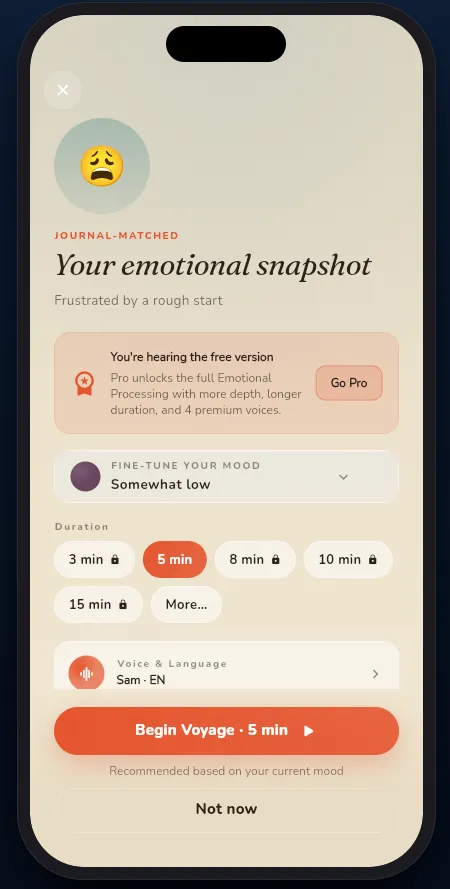
Most people treat journaling as the warm-up. Something you do before the real thing. It is closer to the other way round. Putting words to a feeling is one of the plainest ways to take some heat out of it, and you get that whether or not a session follows.
There is decent evidence for it. A UCLA study led by Matthew Lieberman, published in Psychological Science in 2007, found that simply labeling an emotion in words, in response to emotional images, reduced activity in the amygdala, the part of the brain driving the reaction, while raising activity in the prefrontal regions that regulate it. Researchers call it affect labeling. Most of us call it working out what is actually bothering us.
A few honest lines is enough. You do not have to write well, and no person ever reads it.
Lieberman, M. D., et al. “Putting Feelings Into Words: Affect Labeling Disrupts Amygdala Activity in Response to Affective Stimuli.” Psychological Science 18(5), 421–428. doi.org/10.1111/j.1467-9280.2007.01916.x
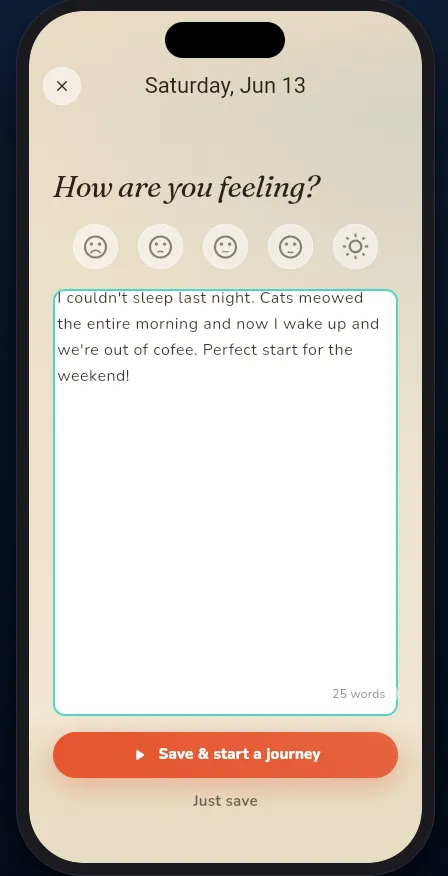
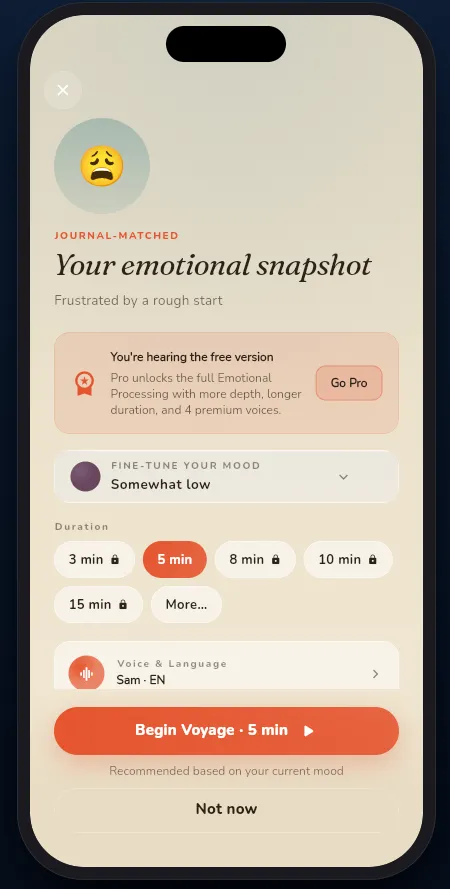
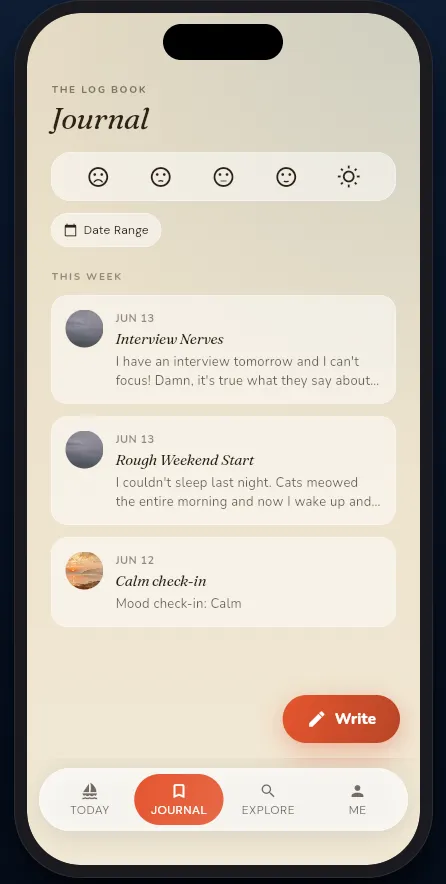
The first version of Shora did the obvious thing and wrote your journal entry into the meditation. Your worries, read back to you in a calm voice. It sounds like the most personal session anyone could give you.
It kept people locked on the exact thoughts the practice was meant to loosen. So we cut it. Your entry is read for mood, that mood picks the session, and then your words are done. What you hear comes from published protocols instead.
Why we build it this way →Entries are private and encrypted, and used for one thing only: suggesting your next session. We don't sell your data, we don't run ads against it, and you can delete everything from inside the app or from our delete-account page.
